

Is that new limp just a sign of getting older, or is it something more serious? Are they sleeping more because they’re tired, or could they be hiding pain? Watching our beloved pets age can bring a mix of love and worry, and it’s natural to feel a little overwhelmed. Providing the best possible senior pet care is every owner’s goal, and we’re here to help you navigate this special time with confidence and clarity.
As your precious companion enters their golden years, their needs will change. This guide, created by our caring Cork vets, is designed to be your trusted resource. We’ll walk you through everything from nutrition and gentle exercise to understanding common age-related health issues. You’ll learn how to spot the subtle signs that require a vet visit, ensuring your VIP (Very Important Pet) remains happy, comfortable, and healthy for as long as possible. Let’s make their retirement years their best years yet.
Key Takeaways
- Understand that seniority isn’t just a number; learn the key signs that your pet is entering their golden years, which can vary greatly by breed.
- Discover how proactive senior pet care, centred on regular vet visits, can help you spot and manage common health issues before they become serious.
- Find out how small, simple adjustments around your home can significantly improve your senior pet’s comfort, safety, and mobility.
- Gain confidence in making compassionate decisions by understanding how to assess your precious pet’s quality of life in their final stages.
Recognising the Signs: When is My Pet Considered a Senior?
As our precious companions grow older, their needs change. But how do you know when your pet has officially become a senior? It’s about more than just the number of candles on their birthday cake. Generally, a pet is considered a senior when they enter the last 25% of their expected lifespan. Recognising this milestone is the first step toward providing excellent senior pet care and ensuring their golden years are happy and comfortable.
Understanding when this transition happens allows you to be proactive. By spotting the early signs of ageing, we can adjust their diet, exercise, and veterinary check-ups to support their changing wellbeing. It’s all about helping your Very Important Pet (VIP) live their best life, for all of their life.
Senior Cats
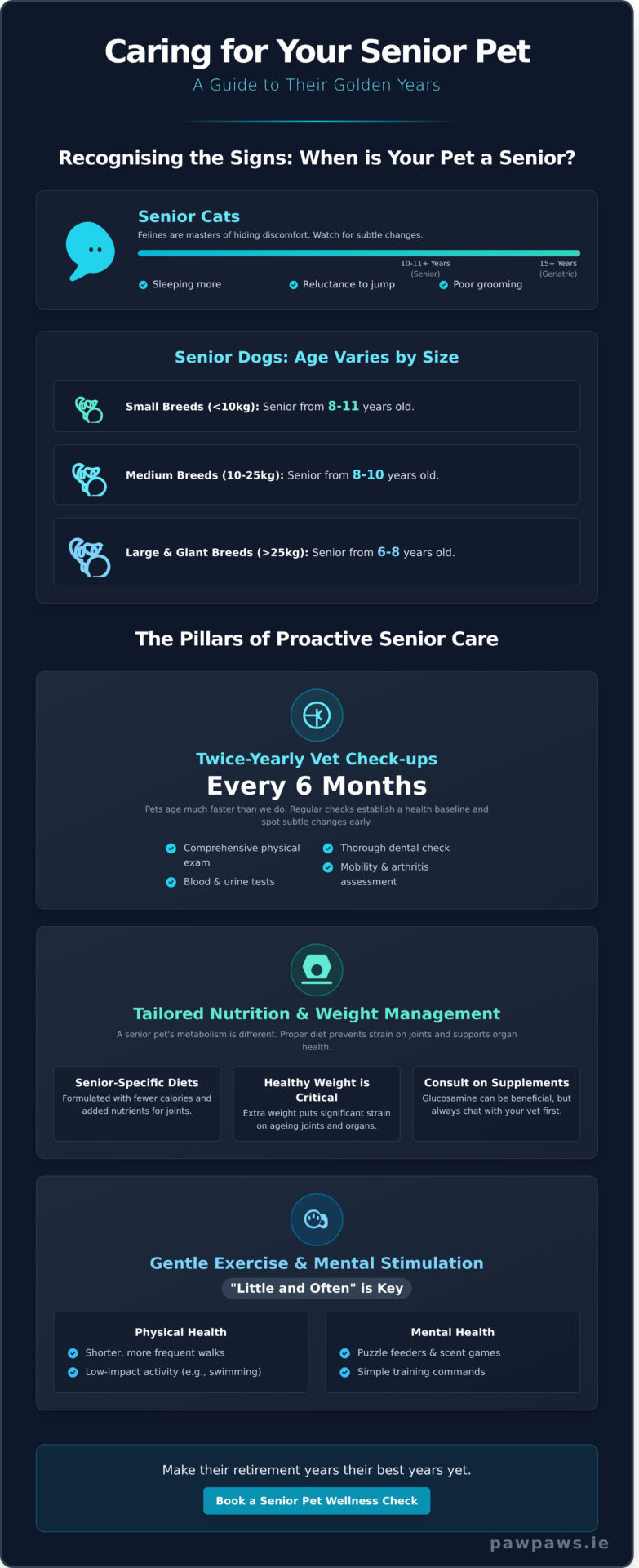
Our feline friends are masters of hiding discomfort, so it’s important to watch for subtle changes. Most cats are considered senior from around 10-11 years old, and they enter their geriatric years after age 15. Early signs can include sleeping more, a reluctance to jump as high as they used to, or changes in their grooming habits, which might lead to a matted or unkempt coat. These small shifts are your cue to start thinking about senior care.
Senior Dogs by Breed Size
For dogs, the journey into their senior years depends heavily on their breed and size. Larger dogs age much faster than their smaller counterparts. The process of aging in dogs is complex, but these guidelines can help you know when to start paying closer attention to their health. While these are helpful estimates, remember that every dog is an individual.
- Small Breeds (under 10kg): Senior from 8-11 years old.
- Medium Breeds (10-25kg): Senior from 8-10 years old.
- Large & Giant Breeds (over 25kg): Senior from 6-8 years old.
Noticing these changes early is the foundation of compassionate senior pet care. By partnering with you, we can create a health plan that supports your best friend through every stage of their life.
The Pillars of Proactive Senior Pet Care
As our precious companions enter their golden years, their needs change. The best approach to their wellbeing is proactive, focusing on prevention and early detection. This simple framework for senior pet care is built on five key pillars that help you give your VIP (Very Important Pet) a long, happy, and comfortable life. A proactive plan not only improves their health outcomes but can also help manage veterinary costs over time by catching issues early.
Twice-Yearly Vet Check-ups
Because pets age much faster than we do, we recommend wellness checks every six months for seniors. These visits allow our experienced team to establish a health baseline and spot subtle changes before they become serious problems. A senior wellness exam typically includes:
- A comprehensive physical examination
- Blood and urine tests to check organ function
- A thorough dental health check
- Mobility and arthritis assessment
Early detection of conditions like kidney disease or arthritis is vital. As experts in Caring for Older Pets advise, identifying these issues early gives us the best chance to manage them effectively. Book a Senior Pet Wellness Check with our caring team today.
Tailored Nutrition and Weight Management
Your senior pet’s metabolism and dietary needs are different from when they were younger. Senior-specific diets are specially formulated with fewer calories to prevent weight gain, and often contain added nutrients to support ageing joints and organ health. Maintaining a healthy weight is one of the most critical things you can do for your pet, as extra kilos put significant strain on their joints. While supplements like glucosamine can be beneficial, it’s essential to chat with us first to find the right solution for your pet’s specific needs.
Gentle Exercise and Mental Stimulation
Keeping your senior pet active is key to maintaining their muscle mass and joint mobility, but the focus should shift from intensity to consistency. Think ‘little and often’-shorter, more frequent walks are often better than one long, strenuous hike. Low-impact activities like swimming or gentle play are excellent options. Don’t forget their mental health! Keep their minds sharp with puzzle feeders, scent games, and simple training commands. This regular engagement helps stave off cognitive decline and keeps them happy and fulfilled.
Common Health Concerns in Older Pets: What to Watch For
Watching our precious companions grow older can bring a few worries, but it’s reassuring to know that many age-related health conditions are very manageable. A key part of good senior pet care is learning to spot the subtle changes that might signal a problem. Noticing these signs early is the most important first step you can take to get your friend the help they need to stay comfortable and happy in their golden years.
Here’s a guide to some of the most common health concerns we see in our older VIPs (Very Important Pets).
Arthritis and Mobility Issues
Just like people, pets can develop arthritis, which causes chronic joint pain and stiffness. While it can be upsetting to see them slow down, there are many ways we can help manage their discomfort.
- Key Signs: Difficulty getting up after resting, hesitating before jumping or using stairs, lagging behind on walks, or showing signs of pain when touched.
Management often includes a combination of gentle exercise, weight management, pain relief medication, and simple home adaptations like non-slip rugs.
Dental Disease
Dental health is crucial for your pet’s overall wellbeing. Painful gums and infections can affect their ability to eat and can even lead to more serious problems with their heart, liver, and kidneys if bacteria enter the bloodstream.
- Key Signs: Bad breath, drooling, dropping food while eating, red or swollen gums, or a reluctance to eat hard food.
Regular professional cleanings and a consistent home care routine are the best ways to protect your pet’s precious smile.
Cognitive Dysfunction Syndrome (CDS)
Sometimes compared to dementia in humans, CDS is a medical condition that affects a senior pet’s brain, leading to changes in their behaviour. It’s more than just “getting old,” and there are treatments that can help manage the symptoms.
- Key Signs: Disorientation or confusion in familiar places, changes to their sleep-wake cycle (e.g., restless at night), house soiling accidents, or seeming less interested in interacting with you.
Changes in Vision and Hearing
A gradual loss of sight or hearing is a normal part of ageing for many pets. The good news is that they are incredibly resilient and adapt very well, especially with a little support from you.
- Key Signs: Bumping into furniture, being easily startled, or no longer responding when you call their name.
You can help by keeping furniture in the same place, using hand signals, and approaching them from the front so they can see you coming.
Adapting Your Home for Your Senior Pet’s Comfort
As our precious companions enter their golden years, their needs change. A crucial part of excellent senior pet care is ensuring their home environment remains a safe and comfortable haven. You don’t need a major renovation; simple, thoughtful adjustments can dramatically improve their quality of life, reduce the risk of injury, and ease any anxiety they may feel. It’s all about making their world a little easier to navigate with love and care.
Improving Accessibility
Mobility can become a challenge for older pets with stiff joints. Making a few key changes can restore their confidence and prevent painful slips or falls on surfaces like wood or tile.
- Add Ramps and Steps: Place ramps to help them get into the car or onto the sofa. Pet-friendly steps can make reaching their favourite high-up spots much safer.
- Provide Grip: Place non-slip rugs or runner mats on slippery floors to give them secure footing and prevent their legs from splaying out.
- Raise Their Bowls: Elevated food and water bowls can reduce strain on their neck and back, making mealtimes more comfortable.
Creating a Comfortable Resting Space
Older pets sleep more, so a comfortable resting spot is essential for their wellbeing. Aches and pains are common, and a supportive bed can make all the difference for your Very Important Pet (VIP).
- Invest in an Orthopaedic Bed: These beds provide extra support for ageing joints and can significantly improve sleep quality.
- Choose a Warm Location: Position their bed away from drafts, in a warm, quiet part of the house where they feel safe.
- Offer Multiple Options: If you have a multi-storey home, consider placing a comfortable bed on each floor so they don’t have to use the stairs to find a place to rest.
Adjusting for Sensory Loss
Just like people, pets can experience a decline in their sight and hearing as they age. This can be disorienting, but you can help them feel secure by making their environment predictable and safe.
- Keep Things Consistent: For a pet with poor vision, try to keep the furniture layout the same to avoid confusion and bumps.
- Use Scent and Texture: You can use different textured rugs or safe, pet-friendly scent markers to help them identify different areas of the home.
- Avoid Surprises: Always approach a hearing-impaired pet from the front so they can see you coming. A gentle stomp on the floor can create a vibration to get their attention without startling them.
These small changes are a powerful way to show your loyal friend how much you care. By adapting your home, you’re not just providing comfort-you’re supporting their dignity and happiness through their senior years. If you have any specific concerns about your pet’s needs, our friendly team at Paw Paws Vet Clinic is always here to help.
Quality of Life and Compassionate End-of-Life Care
One of the most challenging parts of loving a pet is navigating their final chapter. As your loyal friend ages, your focus on their wellbeing shifts to ensuring their comfort and dignity. This is a journey you don’t have to walk alone. Our dedicated team is here to provide gentle guidance and support, helping you make the most loving decisions for your precious VIP (Very Important Pet).
Assessing Your Pet’s Quality of Life
It can be difficult to know when your pet’s bad days are starting to outnumber the good. We often use a “Quality of Life Scale” to help you look at the situation objectively. This scale helps you consider key factors in their daily life:
- Hurt: Is their pain being managed effectively?
- Hunger: Are they eating enough to maintain energy?
- Hydration: Are they drinking properly?
- Mobility: Can they get up and move around without assistance?
- Happiness: Do they still show interest in their favourite things?
Keeping a simple journal to track these things can provide clarity during an emotional time.
Palliative and Hospice Care
When a cure is no longer possible, the focus of senior pet care shifts to comfort. This is known as palliative or hospice care. Our primary goal is to manage pain and other symptoms, ensuring your pet can enjoy their remaining time with you. We can create a plan to help with everything from pain relief to appetite support, allowing you to cherish more peaceful moments together at home.
Saying Goodbye with Dignity
Making the decision to say goodbye is the final, selfless act of love you can offer a pet who is suffering. We want to assure you that euthanasia is a peaceful and painless process. We provide a calm, private space for you and your family. Your pet will simply drift into a deep sleep, often in your arms. Our compassionate team will be there to support you with kindness and understanding through it all.
Navigating end-of-life decisions is heartbreaking, but it is a fundamental part of responsible and loving senior pet care. If you have questions or need a compassionate ear, please don’t hesitate to reach out. We are here to help you honour the incredible bond you share with your pet. Contact us at pawpaws.ie to speak with our caring team.
Your Partner in Their Golden Years
Watching our beloved companions enter their senior years is a privilege, a time filled with gentle walks, cosy cuddles, and a deeper bond. As we’ve explored, the key to making this chapter a happy and comfortable one lies in proactive observation and gentle adjustments. From recognising the early signs of ageing and adapting your home for better mobility to understanding common health concerns, your role as their advocate is more important than ever. Great senior pet care is a partnership built on love and attentiveness.
You are not alone on this journey. Here at Paw Paws Vet Clinic, our experienced and compassionate team has been a trusted part of the Cork community for over 10 years. We believe every pet is a Very Important Pet (VIP), which is why we create personalised care plans tailored to their unique needs. We’re dedicated to providing the support and guidance you need to make informed, loving decisions for your best friend.
Ensure their golden years are as healthy and joyful as possible. Book a Senior Pet Wellness Check with our caring Cork vets today and let us help you cherish every precious moment together.
Frequently Asked Questions About Senior Pet Care
How often should my senior pet visit the vet?
For our senior VIPs (Very Important Pets), we recommend wellness check-ups every six months. As pets age, health changes can happen quickly, and more frequent visits allow us to catch potential issues like arthritis, dental disease, or organ changes early. This proactive approach is a cornerstone of excellent senior pet care, helping ensure your precious friend enjoys their golden years in comfort and health. Please book an appointment to discuss a tailored schedule for your pet.
Is pet insurance worth it for an older dog or cat?
This is a personal decision, but it can provide significant peace of mind. While premiums for older pets can be higher and pre-existing conditions are typically not covered, insurance can be invaluable for unexpected illnesses or accidents. With the potential for vet bills to run into hundreds or even thousands of Euro, having a policy in place can make a difficult situation much less stressful, ensuring you can choose the best treatment for your companion without financial worry.
What are the best supplements for senior pets with arthritis?
Many senior pets with joint stiffness benefit from supplements containing glucosamine, chondroitin, and omega-3 fatty acids, which can help support cartilage and reduce inflammation. However, it is crucial to consult with your vet before starting any new supplement. We can recommend a product with proven effectiveness and ensure the dosage is safe and appropriate for your pet’s specific health needs, weight, and any other medications they may be taking.
How can I tell if my senior pet is in pain?
Pets are masters at hiding pain, so signs can be subtle. Look for changes in behaviour such as reluctance to climb stairs, hesitation to jump up, irritability when touched, or a decreased appetite. You might also notice them licking a specific joint excessively, walking more stiffly, or sleeping more than usual. If you notice any of these signs, it’s important to schedule a check-up with us. We can help identify the source of the discomfort.
My older dog has started having accidents in the house. What should I do?
First, please don’t assume it’s a behavioural issue. Incontinence in senior dogs often has an underlying medical cause, such as a urinary tract infection, kidney disease, diabetes, or canine cognitive dysfunction. The very first step is to book a veterinary appointment. We can run tests to diagnose the problem and discuss treatment options, which might include medication or simple management strategies to help your dog and keep them comfortable.
What is the best food for a senior pet?
The “best” food is one that is tailored to your pet’s individual needs. Diets designed for seniors are often lower in calories to prevent weight gain, higher in fibre for digestive health, and may contain ingredients like antioxidants and joint supplements. Some pets may need a specific prescription diet for conditions like kidney or heart disease. We are always here to provide a personal recommendation based on your pet’s complete health profile to ensure their nutritional wellbeing.